

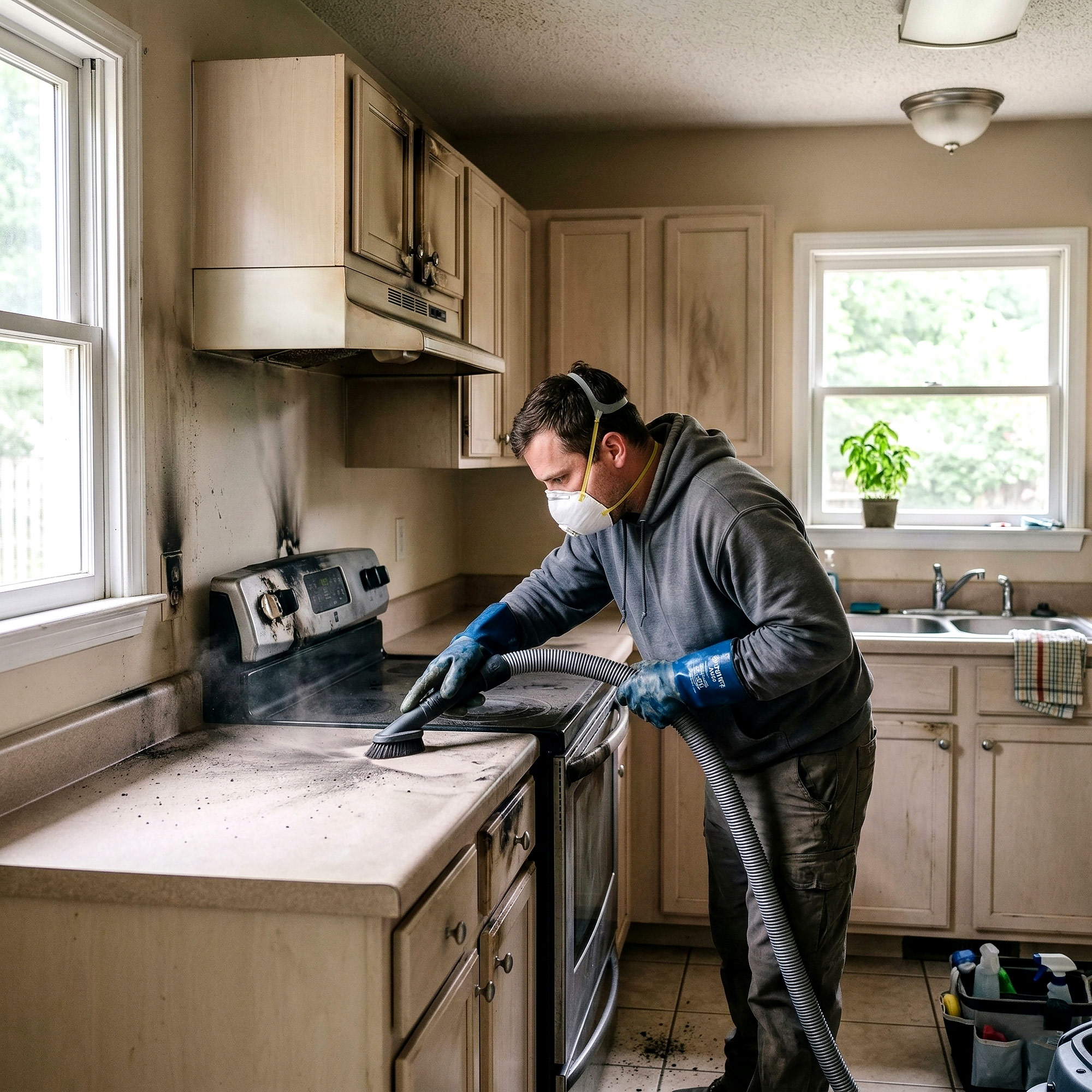
Here’s the brutal truth about fire damage: even after the flames are out and the visible damage is dealt with, that smoke smell sticks around like an unwelcome houseguest. It’s in your walls, your furniture, your clothes, your carpets—basically everywhere. And it doesn’t matter how many candles you light or how long you leave the windows open, that acrid, burnt smell isn’t going anywhere without serious intervention.
Getting rid of fire odor isn’t a DIY project. It requires professional equipment, specialized cleaning methods, and an understanding of how smoke actually behaves in a home. Let’s break down what it takes to truly eliminate fire smell instead of just masking it.
How Smoke Gets Everywhere (Even Where Fire Didn’t)
One of the most frustrating things about fire damage is that smoke doesn’t respect boundaries. You might have had a kitchen fire that was contained to one room, but somehow your bedroom closet two floors up smells like smoke. How does that happen?
Smoke travels fast and finds every crack, gap, and porous surface in your home. It moves through:
- Air vents and ductwork
- Wall cavities and crawl spaces
- Electrical outlets and light fixtures
- Tiny gaps around doors and windows
- Insulation and subflooring
Once smoke particles settle into these areas, they’re not coming out without targeted treatment. This is why you can clean every visible surface and still smell smoke—the odor is hiding in places you can’t easily reach.
Surface Cleaning Isn’t as Simple as Wiping Things Down
You might think you can just grab some all-purpose cleaner and wipe down your walls. Unfortunately, smoke residue—called soot—requires special handling.
If you use the wrong cleaning method, you’ll actually make things worse by:
- Spreading the soot instead of removing it
- Pushing it deeper into porous surfaces
- Creating permanent stains
- Damaging finishes on walls and furniture
Professional fire restoration teams use:
- pH-specific cleaning solutions designed for soot
- Dry cleaning sponges that lift soot without water
- HEPA vacuums that capture fine particles
- Specialized techniques for different surface types
Walls, ceilings, countertops, fixtures—everything needs to be cleaned methodically with the right products. It’s tedious work, but it’s the only way to actually remove the source of the smell rather than just moving it around.
Soft Materials Are Smoke Magnets
If hard surfaces are challenging, soft materials are a nightmare. Upholstered furniture, curtains, carpets, bedding, and clothing absorb smoke like sponges. That’s why these items often smell the worst and hold onto odors the longest.
Regular washing or spot cleaning rarely does the job. The smoke particles are embedded deep in the fibers, and they need professional treatment to be fully removed.
Restoration professionals use:
Restoration professionals use:
- Industrial ozone generators that break down odor molecules at a chemical level
- Thermal fogging that penetrates fabrics the same way smoke did
- Hydroxyl generators for sensitive materials
- Professional dry cleaning for salvageable items
Some items—like mattresses or heavily damaged upholstered furniture—might be beyond saving. It’s frustrating, but trying to keep something that permanently smells like smoke isn’t worth it. You’ll never get rid of the odor completely, and it’ll continue affecting your indoor air quality.
Air Quality Matters More Than You Think
Even after you’ve cleaned every surface and treated all the soft materials, smoke particles can still be floating in your air. These microscopic particles settle on everything and keep the smell alive.
Professional air purification involves:
- HEPA air scrubbers that capture tiny particulates
- Ozone treatments that chemically neutralize odor molecules
- Hydroxyl generators for occupied spaces (safer than ozone)
- Replacing HVAC filters and cleaning ductwork
In Florida’s humid climate, air quality is especially important. Moisture can reactivate smoke residue and bring odors back, which is why thorough air treatment is critical.
Making Sure the Smell Doesn’t Come Back
Here’s what a lot of people don’t realize: if you don’t seal surfaces properly after cleaning, smoke odor can resurface weeks or even months later.
Temperature changes, humidity, and even just time can cause trapped smoke particles to release odors again. That’s why professional restoration includes:
- Sealing walls and ceilings with odor-blocking primers
- Treating ductwork and replacing filters
- Addressing hidden areas like wall cavities
- Testing air quality before calling the job complete
Skipping these final steps means you might think the problem is solved, only to have the smell creep back when Florida’s summer heat kicks in or when you turn on your AC for the first time.
Don’t Live With That Smell
Fire damage is traumatic enough without having to smell it every day for months. You shouldn’t have to live with that constant reminder, and you definitely shouldn’t have to breathe in smoke particles that could affect your health.
Professional fire restoration isn’t just about making your house look normal again—it’s about making it safe, clean, and truly livable.
Dealing with lingering smoke smell after a fire in your Florida home? Contact East Coast Water Restoration for professional fire odor removal that actually works. We use advanced equipment and proven methods to eliminate smoke odor at its source—not just cover it up. Let us help you reclaim your home and breathe easy again.
