

How Professional Water Extraction Actually Works (Step-by-Step)
How Professional Extraction Protects Your Home’s Structural Integrity.
When water suddenly invades your home, whether it’s a pipe that bursted at 2 AM, a flooded laundry room, or from storm damage, your first instinct is probably to grab every towel you own and start mopping. I completely understand that impulse. But here’s what we’ve learned after years in this industry: proper water extraction is so much more than removing visible water.
It’s a precise process designed to prevent the secondary damage that often costs more than the original water intrusion—mold growth, structural deterioration, and ruined belongings. Let’s walk through how we actually handle water extraction properly.
Step 1: We Assess the Situation Immediately
When our team arrives, the first thing we do is a thorough assessment. We’re not just looking at where the water is, we’re figuring out where it came from, what type of water we’re dealing with, and what materials have been affected.
This matters because:
- Clean water from a supply line is handled differently than gray water from a washing machine
- Contaminated water requires different safety protocols and disposal methods
- Different materials (hardwood vs. carpet vs. tile) absorb water at different rates
This assessment determines what equipment we’ll use and what safety measures we need to take.
Step 2: Stop the Water Source
This seems obvious, but it’s critical. Before we can extract anything, we need to stop water from continuing to flow. That might mean shutting off a valve, fixing a broken pipe, sealing storm damage, or addressing whatever caused the intrusion in the first place.
You’d be surprised how often we arrive to find water still actively flowing because the homeowner couldn’t locate the shutoff valve or wasn’t sure how to address the source.
Step 3: Remove All Standing Water
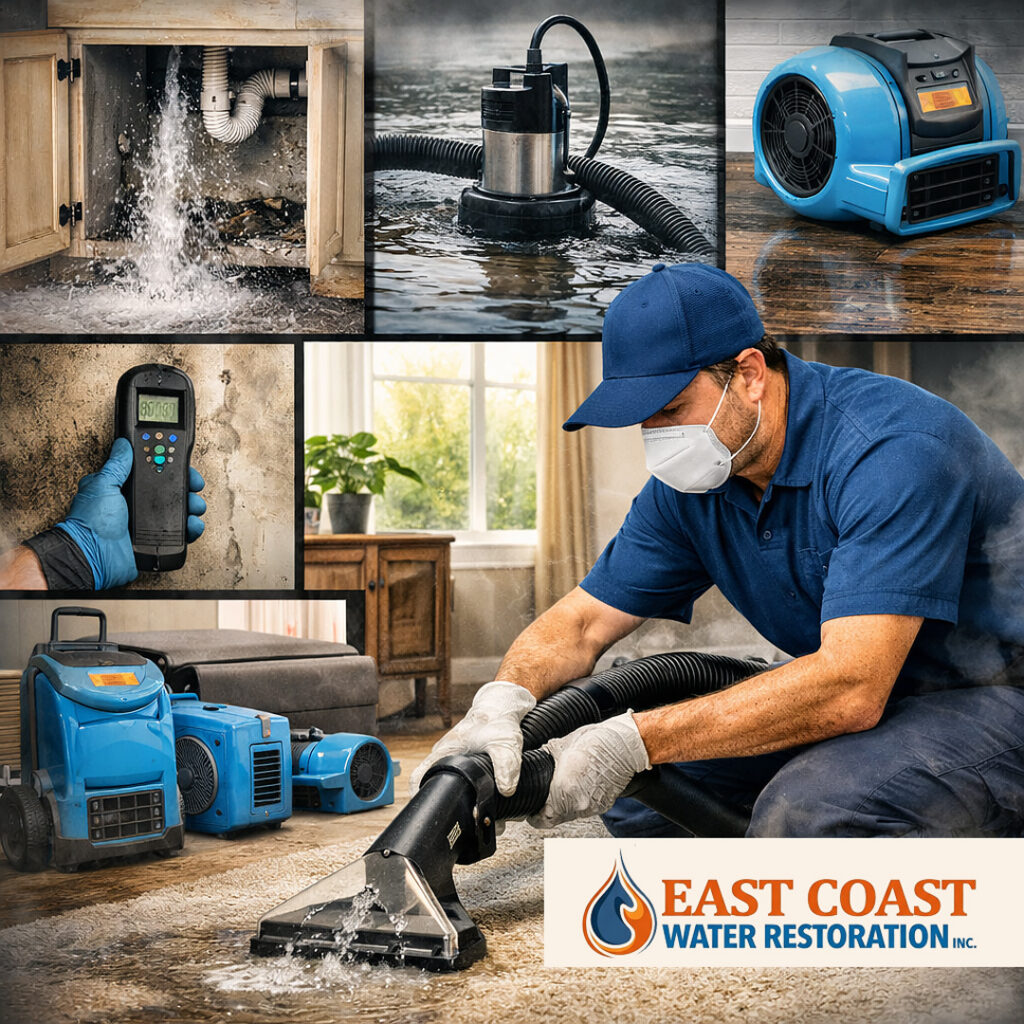
Now we bring in the equipment—high-powered pumps and industrial wet vacuums that can remove hundreds of gallons quickly. We extract water from floors, carpets, padding, crawl spaces, and anywhere else it has pooled.
This isn’t the same as a shop-vac from Home Depot. Our equipment is designed to pull water from deep in carpet padding and subflooring, not just surface moisture. The faster we remove standing water, the less time it has to spread and the shorter the overall drying time becomes.
Step 4: Find the Hidden Moisture
Here’s where people often underestimate the problem. Just because you don’t see water doesn’t mean it’s not there. Water travels through wall cavities, under baseboards, and into places you’d never think to check.
We use infrared cameras and moisture meters to detect hidden water behind walls, under flooring, and inside ceiling cavities. In Florida’s climate, missing these hidden pockets of moisture is basically guaranteeing a mold problem in a few weeks.
Step 5: Strategic Drying
Once we’ve extracted all the standing water we can, we set up industrial air movers and dehumidifiers positioned strategically throughout the affected areas. These machines create airflow patterns that dry walls, floors, furniture, and the air itself.
This isn’t a one-day process. Depending on how severe the water damage is and what materials were affected, proper drying can take several days. We monitor moisture levels continuously and adjust equipment as needed.
Rushing this step is one of the biggest mistakes people make when they try to handle water damage themselves.
Step 6: Clean and Sanitize Everything
Once everything’s dry, we clean and disinfect all affected surfaces. Even clean water sitting for hours can create conditions for bacterial growth, and any water that came from outside or from contaminated sources requires thorough sanitization.
We also address odor removal if needed. Water damage often leaves behind musty smells that won’t go away on their own.
Step 7: Verify and Document
Before we call a job complete, we verify that all moisture is actually gone and the area is safe. We test moisture levels in materials, check air quality, and make sure nothing was missed.
We also provide detailed documentation for insurance claims with photos, moisture readings, equipment logs, everything your insurance company will want to see.
Why This Process Matters
Water extraction isn’t just about getting rid of puddles. It’s about preventing the cascade of problems that develop when water damage isn’t handled properly. This can be mold growth, warped floors, ruined drywall, structural damage, and health issues.
At East Coast Water Restoration, we’ve seen what happens when water damage gets handled halfway or when homeowners wait too long to call professionals. It’s always more extensive, more expensive, and more disruptive than if it had been addressed properly from the start.
Dealing with water damage in your Florida home? Contact East Coast Water Restoration for fast, professional water extraction. We’ll respond quickly, remove all water (including hidden moisture), and dry your property properly. Remember, water damage gets worse every hour.

- Free Estimates
- 24/7/365 Emergency Services
- 60-Minute On-Site Response
- We Work Directly With Your Insurance
Navigation
CONTACTS
- Address:
- 2844 Stirling Rd Suite S, Hollywood. FL 33020
© Copyrights 2026 Eastcoastrestorationpros.com | All Rights Reserved | Terms & Privacy